News
Vacuum Toilets: A Game-Changing Sanitation Solution for Disaster Relief and Harsh Environment
Vacuum Toilets: A Game-Changing Sanitation Solution for Disaster Relief and Harsh Environment
In the aftermath of natural disasters, regional public sanitation systems often suffer severe damage. Collapsed infrastructure, disrupted water supply, and contaminated soil and water sources create harsh living conditions for affected populations and bring huge challenges to emergency rescue work. Traditional restroom facilities, with their long construction cycles, high water consumption, and open pollution risks, are unable to meet rapid emergency needs and easily trigger secondary public health crises such as bacterial transmission and environmental pollution. Against this backdrop, vacuum toilets have emerged as a reliable, efficient, and eco-friendly sanitation solution, widely adopted in global disaster relief, high-altitude regions, and harsh outdoor environments.
Superior Adaptability: Rapid Deployment Without Complex Construction
One of the most prominent advantages of vacuum toilets is their ultra-fast installation and flexible deployment. Unlike conventional toilets that require foundation construction, pipeline laying, and long-term on-site engineering, modern vacuum toilets adopt a modular integrated design. The whole unit requires no complicated civil engineering or fixed municipal sewage pipelines. It can be quickly assembled and put into operation within a short period, perfectly matching the urgent timeline of post-disaster emergency resettlement. This feature enables timely supplementation of basic sanitation facilities in disaster-stricken areas and effectively fills the gap in emergency public health support.
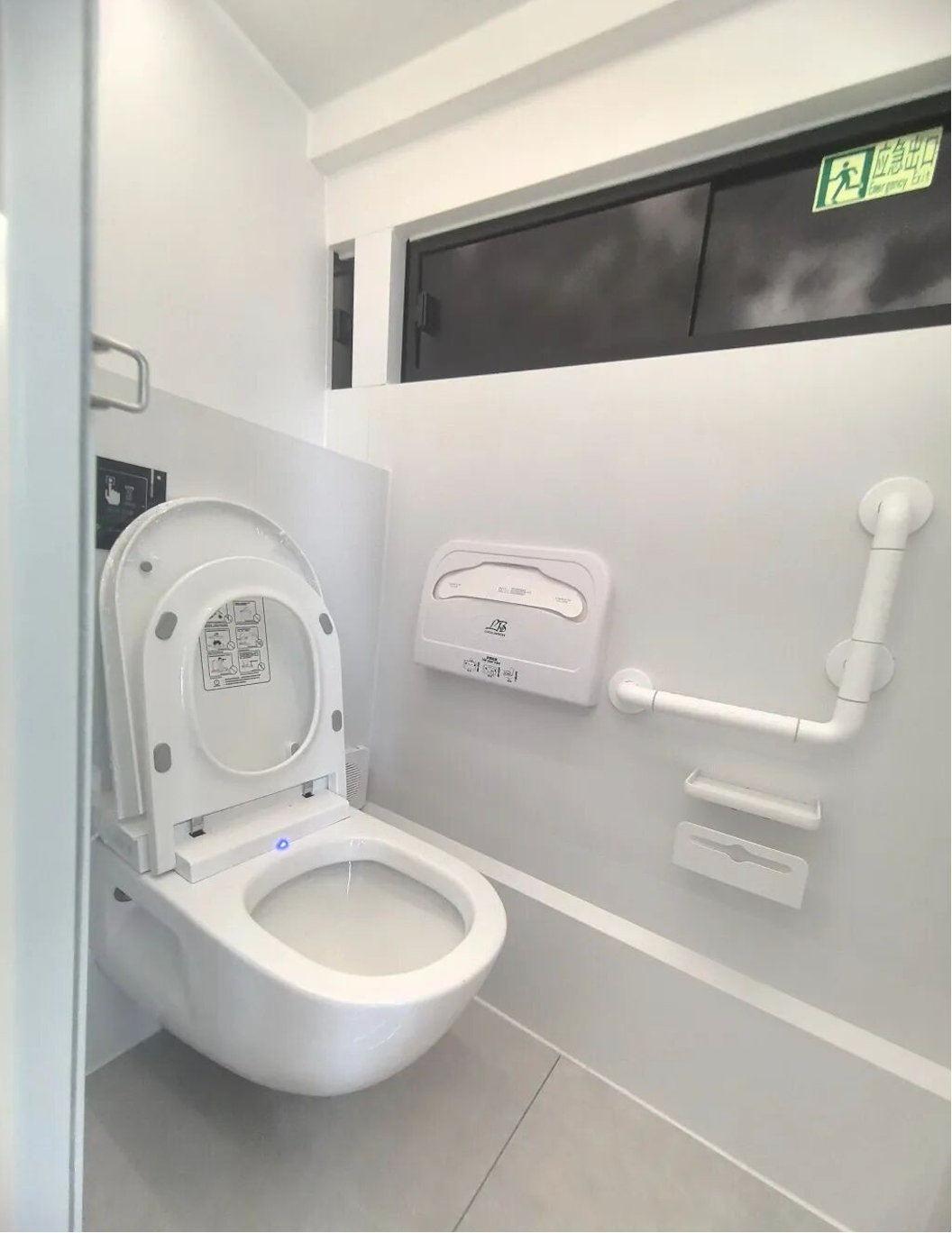
Extreme Water Saving: Ideal for Water-Scarce Emergency Scenarios
Water resource shortage is a common problem in disaster-affected zones and remote harsh areas. Traditional flush toilets consume 6 to 9 liters of water per use, which is unaffordable in water-strapped environments. Powered by advanced vacuum negative pressure technology, vacuum toilets rely on air pressure difference to transport waste instead of excessive water flushing. They consume less than 0.8 liters of water per flush, achieving a water-saving rate of over 80% compared with traditional toilet equipment. The ultra-low water consumption greatly reduces reliance on limited local water resources, lowers wastewater discharge, and alleviates the pressure of on-site sewage treatment and waste transportation.
Closed and Sanitary: Effectively Prevent Epidemic Spread
Post-disaster open fecal pollution is a major cause of intestinal infectious diseases and environmental deterioration. Traditional temporary toilets are open-structured, prone to odor diffusion, mosquito breeding, and fecal leakage, which seriously threaten public health. In contrast, vacuum toilets adopt a fully closed waste collection and storage system. All sewage and waste is transported and stored in sealed pipelines and tanks without external overflow or leakage. The effective odor isolation and closed pollution control fundamentally reduce the risk of soil and water contamination. Meanwhile, the centralized collected waste can be transported and treated harmlessly, building a solid barrier against secondary epidemics in disaster areas.
Strong Environmental Tolerance: Stable Operation in Complex Terrains
Conventional sanitation equipment is highly restricted by terrain and climate conditions, failing to operate stably in mountainous regions, high-altitude plateaus, and low-temperature extreme environments. Vacuum toilets break through the limitations of traditional facilities with excellent environmental adaptability. They can maintain stable and normal operation in complex terrains and harsh climates such as high-cold and high-altitude areas, rugged mountain roads, and remote scenic spots. Verified by multiple practical application scenarios including high-altitude scenic areas and post-disaster reconstruction sites, the equipment features strong resistance to extreme weather and terrain adaptability, making it applicable to various special and harsh working conditions.
Performance Comparison: Obvious Comprehensive Advantages Over Traditional Toilets
In terms of infrastructure cost and construction efficiency, vacuum toilets eliminate the need for large-scale civil engineering and pipeline laying, with a far shorter deployment cycle than traditional toilets, making them more suitable for temporary emergency use. In terms of environmental protection and sanitation, their fully closed structure avoids odor pollution and fecal leakage, realizing cleaner and safer use. In terms of resource consumption, their ultra-low water consumption solves the pain point of high water consumption of traditional toilets, showing outstanding advantages in water-deficient and emergency scenarios.
Conclusion
With the increasing global demand for emergency disaster prevention, public health security, and outdoor infrastructure construction, vacuum toilets have become a mainstream innovative sanitation solution by virtue of rapid deployment, water conservation, environmental friendliness, and strong terrain adaptability. Breaking through the multiple bottlenecks of traditional toilet equipment, they provide reliable, economical, and hygienic basic sanitation support for disaster relief, remote areas, and special engineering scenarios. As green and low-carbon public facilities continue to develop, vacuum toilets will enjoy broader application prospects in global public health construction, outdoor tourism, emergency rescue, and other fields.
Products Category
Latest News
CONTACT US
Name:
Mobile:+86-13222235952
Tel:+86-13222235952
Email:sales@to-rail.com
Add:Room B1701, Building 4, Dongfang Xintiandi, Yangshe Town, Zhangiiagang City, Suzhou City. Jiangsu Province, China, Zipcode:215617